
Ground-up construction lending is seeing significant momentum in 2026, with nationwide Construction Loan Documents produced in Lightning Docs up 147% in year-over-year volume through April. While established markets continue to dominate overall activity, several states have rapidly emerged as top markets as demand for new construction financing accelerates across the country.
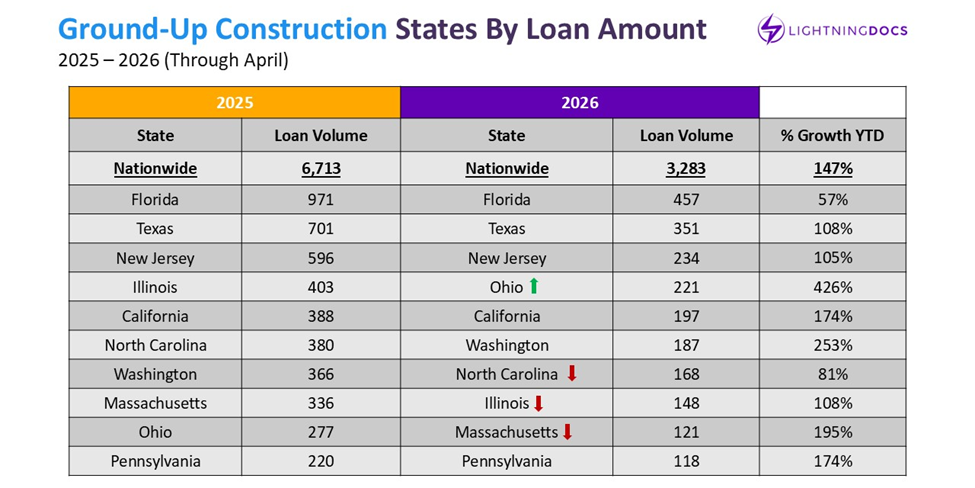
Data from Lightning Docs shows a clear separation between the industry’s top three markets and the rest of the field. Florida, Texas, and New Jersey ranked as the top three states for ground-up construction lending in 2025 and have maintained those same positions through the first four months of 2026.
Outside of the top three, several states are making significant moves.
Ohio recorded the largest ranking increase among the top 10 states, climbing five spots year-over-year. The movement mirrors broader growth trends already seen within the bridge lending sector, where Ohio has similarly emerged as one of the fastest-growing markets for private lending activity.
Massachusetts shows an impressive 195% year-over-year increase in ground-up construction loan volume. Despite that growth, the state slipped in the rankings alongside North Carolina and Illinois as other markets expanded even faster.
One standout market located just outside the top 10 is Oregon. The state has seen explosive growth in 2026, increasing ground-up construction loan volume by 1,044% year-over-year through April. At this point in 2025, Oregon had recorded just nine ground-up construction loans for the year. Through April of 2026, its annual figure has already climbed to 103, moving the state up to 11th on the list.
As business purpose lending continues to evolve, ground-up construction financing remains one of the fastest-growing product categories in private lending. Much of the growth is being driven by experienced fix-and-flip investors shifting toward new construction projects in search of stronger margins. For many lenders, the exposure profile and built-in interest reserves associated with construction lending are making the economics increasingly attractive compared to traditional renovation and value-add projects.
Combined with sustained housing demand and the ongoing need for new inventory across markets nationwide, the trend is helping accelerate growth in ground-up construction lending activity across both established and emerging markets.